Broken on Purpose: The Underground Archivists Who Treat Software Disasters Like Sacred Texts
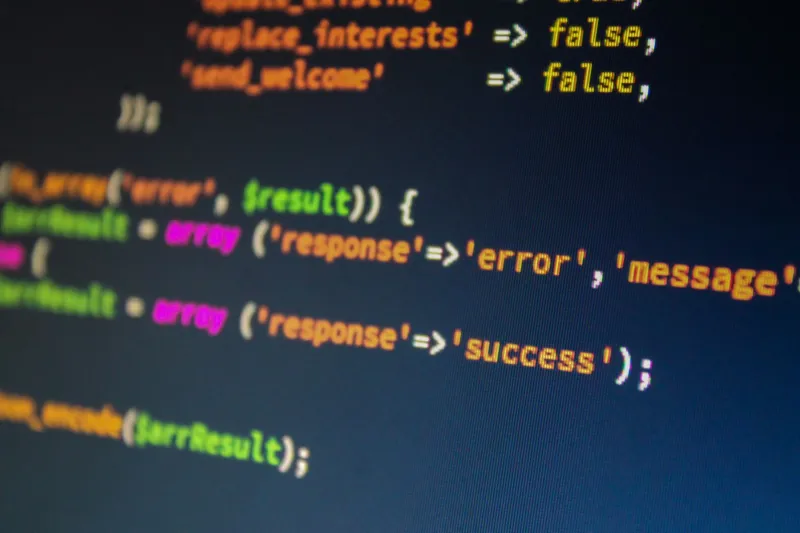
There's a GitHub repository out there with nearly four hundred commits, meticulously maintained, that contains nothing but software that catastrophically failed. Not abandoned software. Not outdated software. Software that broke—publicly, expensively, sometimes hilariously—and then got quietly swept under the rug by companies who'd rather you forgot it ever existed.
The person maintaining it goes by a handle that translates loosely to "error log." They haven't pushed a working program in years. That's kind of the point.
The Museum Nobody Asked For
When most people think about digital preservation, they think about saving things that worked—classic video games, early websites, the web pages that shaped the internet's personality. The Internet Archive gets donations. Retro gaming communities get documentaries. Old software that functioned gets nostalgia.
But there's a quieter, stranger community doing something different. These are the people collecting the failures. The source code for apps that crashed on launch day. The archived builds of enterprise software that deleted its own databases. The legendary demo reels of tech that promised everything and delivered a kernel panic.
They call themselves things like "failure archaeologists" or "chaos librarians," though most of them would shrug at any formal label. What unites them is a conviction that how things break tells you more about a system than how things work.
"A successful program just runs," says one contributor to a private Discord server dedicated to what members call "catastrophic artifact collection." "A broken one shows you every assumption the developer made. Every corner they cut. Every place they thought nobody would ever look."
The Artifacts Themselves
What exactly gets preserved here? The range is genuinely wild.
There are the famous disasters—source code leaks and reconstructed builds from software projects that became cautionary tales in computer science classrooms. The kind of stuff that gets referenced in engineering postmortems and "what not to do" talks at developer conferences. Ariane 5's flight software. The original Healthcare.gov codebase from its disastrous 2013 rollout. Knight Capital's trading algorithm that lost $440 million in 45 minutes.
But then there's the stranger, more personal stuff. Hobbyist programs written by teenagers in the nineties that corrupted their own save files. Shareware games that could only be completed by exploiting a memory overflow bug. Corporate intranet tools so poorly designed that employees reverse-engineered workarounds that became more widely used than the original software.
One archivist—based somewhere in the Pacific Northwest, based on their timezone activity—maintains what they describe as a "bug zoo": a collection of virtual machines, each running a different piece of broken software in a stable, preserved broken state. Not patched. Not improved. Frozen mid-malfunction, like a fly in amber.
"Most bugs get patched out of existence," they wrote in a forum post that's been shared around these circles for years. "We lose them forever. Future developers never get to see them. They just inherit the scars."
Why Breaking Things Matters
This isn't just nostalgia dressed up in technical language. There's a genuine argument being made here, and it's one that software engineers with actual credentials have started to take seriously.
Understanding failure modes is foundational to building resilient systems. Chaos engineering—the practice of deliberately introducing failures into live systems to test their limits—is now a standard practice at companies like Netflix and Amazon. The whole discipline is built on the premise that you can't design for failure unless you've deeply studied what failure actually looks like.
The archivists in these communities see themselves as providing raw material for exactly that kind of study. Historical failure documentation. Concrete examples of the ways human assumptions get encoded into software and then shatter against reality.
"Every bug is a decision," reads the pinned message in one archive-focused Discord. "Someone decided this was fine. We're keeping receipts."
The Ethics of the Broken Archive
It's not entirely uncomplicated. Some of what gets preserved sits in legal gray zones—leaked source code, reconstructed proprietary builds, archived versions of software that companies have actively tried to scrub from the internet. The community navigates this with varying degrees of caution.
There are ongoing debates about what counts as preservation versus what counts as, say, distributing stolen code. Most serious contributors draw a hard line at anything that could cause active harm. A broken trading algorithm preserved as a historical document is different from a broken trading algorithm someone might actually try to run.
But there's also a philosophical argument that corporations don't get to own their failures indefinitely. That when a piece of software causes a public disaster—costs people money, crashes critical infrastructure, ships with security vulnerabilities that exposed millions of users—the public has a legitimate interest in studying what went wrong. The company's desire to memory-hole it doesn't override that.
"They got to bury the postmortem," one longtime community member said in a thread that ran to several hundred replies. "We're just digging it back up."
What Gets Studied Here
Walk through these archives long enough and patterns start to emerge. Certain failure modes appear again and again across decades of software history, in completely different contexts, built by completely different teams.
Integer overflow. Off-by-one errors. Race conditions that only trigger under specific load conditions that nobody tested for. Security assumptions that made perfect sense in 1997 and became catastrophic by 2005. The same categories of human error, recurring like a chorus.
That's part of what makes this community feel less like a collection of curiosities and more like something with genuine intellectual weight. The failures aren't random. They're patterned. And the pattern is about people—how developers think, what they optimize for, which risks they tend to underestimate.
"Software fails in human ways," wrote one contributor who goes by a name that's just a string of hex values. "That's what makes it worth studying. It's not random noise. It's us, failing in the same directions, over and over."
The Signal in the Noise
Izatioth exists because the internet's weirdest corners tend to be its most honest ones. And these failure archives are about as honest as it gets—a community that has decided the most valuable thing it can do is pay careful attention to the things everyone else wants to forget.
There's something almost defiant about it. In a tech culture that worships the pivot, the iteration, the clean slate, these archivists are insisting that the mess matters. That the wreckage has something to say.
The bugs don't get patched here. They get studied. They get annotated. They get passed around in private servers and obscure forums by people who believe, with genuine conviction, that you can't understand where software is going until you've spent serious time with where it went wrong.
Somewhere, a virtual machine is running a piece of software that has been broken since 2001. It's been broken the same way every single day for over two decades. Someone checks on it regularly. Takes notes. Keeps the receipts.
That's the archive. That's the point.