Pixels Out of Place: How the Internet's Broken Corners Became Its Most Honest Art
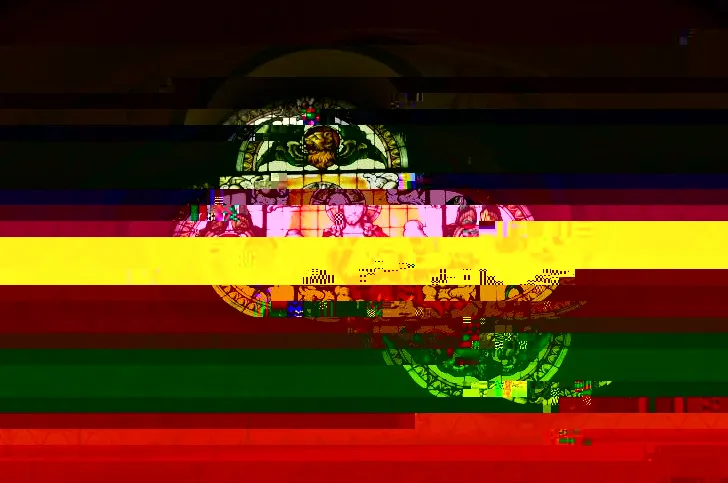
Photo: Lucas Rafael Tenllado Gil, CC BY-SA 4.0, via Wikimedia Commons
When the Error Message Becomes the Message
There's a website out there — no, we're not linking it, part of the charm is finding it yourself — where every click produces a slightly different version of the page. Colors shift. Text overlaps itself. Images load halfway and stay that way forever. It's technically broken. It's also, somehow, one of the most compelling things you can stumble across at 2 a.m. on a Tuesday.
This is the quiet revolution happening in the margins of the internet right now. While Silicon Valley pours billions into frictionless interfaces, invisible loading times, and user experiences so smooth they barely register as experiences at all, a growing community of artists, designers, and digital weirdos is doing the exact opposite. They're breaking things on purpose. And the results are genuinely beautiful.
The aesthetic has picked up a few names over the years — glitch art, net art, broken web aesthetics, or just "that stuff that looks like your monitor is dying." Whatever you call it, it's found a serious foothold in American internet culture, from underground art forums to gallery installations in Brooklyn and LA.
The Genealogy of Digital Ugliness
To understand why corrupted interfaces feel so alive right now, you have to go back to the early web. The 1990s internet was, by any modern design standard, a disaster. Tiled backgrounds that made your eyes water. Visitor counters ticking up like a broken gas pump. Animated GIFs of dancing babies and spinning envelopes. It was chaotic, personal, and deeply human.
When Web 2.0 arrived and then the app economy after that, all of that texture got sanded away. Everything became cleaner, faster, and more corporate. The personal homepage died. The weird little Flash experiments vanished. The internet got very good at being useful and very bad at being interesting.
Glitch aesthetics are, in a lot of ways, a grief response to that loss. Artists who grew up online in the dial-up era carry a nostalgia for imperfection that goes deeper than just aesthetics — it's about a time when the internet felt like it belonged to the people using it rather than the platforms hosting them.
The Artists Doing It on Purpose
Rosa Mercer, a digital artist based out of Portland, Oregon, spends her days deliberately corrupting image files. She opens JPEGs in text editors, changes random lines of code, and then renders what comes out. The results look like photographs melting, like memory failing in real time.
"People always ask me if something went wrong," she says. "And I tell them yeah, everything went wrong, that's the whole point. The error is the work."
Mercer's pieces have shown in small galleries and circulated widely through digital art communities online. She's part of a loose, mostly informal network of artists who treat digital corruption not as a bug to be fixed but as a medium to be explored.
On the more technical end of the spectrum, there are web developers who build sites that are intentionally dysfunctional — pages that resist navigation, interfaces that respond to input in unexpected ways, experiences that feel like they're actively disagreeing with you. One developer who goes by the handle Vanthorpe online (he declined to give his real name) described his work as "building websites the way you'd write a bad dream."
"Every major tech company is optimizing for the same thing," Vanthorpe explained over a Discord call. "They want you to feel nothing. No friction, no surprise, no weirdness. I want the opposite of that. I want you to feel like the computer is haunted."
Why Imperfection Hits Different Right Now
There's a psychological dimension to this that's worth sitting with for a second. We live in an era of relentless digital polish. Social media feeds are curated to the point of unreality. AI-generated content is flooding every corner of the web with technically perfect, spiritually empty material. Against that backdrop, something that's genuinely strange, genuinely broken, genuinely imperfect feels almost transgressive.
It signals human presence. It suggests that something real happened here.
This is part of why lo-fi aesthetics have exploded in music, why film grain is back in photography, why people are buying disposable cameras again. There's a hunger for texture, for evidence of process, for things that couldn't have been generated by an algorithm optimizing for engagement.
A glitched-out website, in this context, is almost a political statement. It's saying: this was made by a person, for no particular reason, and it doesn't care if you like it.
The Tension With Mainstream Web Culture
Not everyone is charmed by this. UX designers — people who spend their careers making sure buttons are the right size and checkout flows don't confuse people — tend to have a complicated relationship with the glitch art movement.
The argument against it is reasonable: accessibility matters. People with visual impairments, cognitive differences, or just older hardware can genuinely struggle with interfaces that are intentionally disorienting. There's a privilege embedded in being able to appreciate "broken" design when you're coming from a position where functional design is a given.
The better artists in this space are aware of that tension. The goal, most of them will tell you, isn't to make the entire web unusable — it's to carve out specific spaces where the rules don't apply, where you've opted in to the weirdness.
Think of it like experimental cinema. Nobody's suggesting every movie should be as disorienting as an early David Lynch film. But those films exist, they matter, and they do things that a perfectly competent Hollywood thriller simply can't.
Finding the Signal in the Static
Here at Izatioth, we spend a lot of time in the parts of the internet that don't make the tech news cycle. And what we keep finding, over and over, is that the most interesting stuff online tends to live in the cracks — in the spaces between polished platforms, in the corners that haven't been optimized yet, in the sites that look like they're falling apart.
The glitch art movement isn't a rejection of the internet. It's a love letter to what the internet could be when it stops trying so hard to be seamless. When it lets itself be weird, be human, be a little bit broken.
There's a reason people who find these sites remember them. You don't forget the website that felt like it was dreaming. You forget the ones that worked perfectly.