Rest in Beta: The Obsessives Who Refuse to Let Dead Apps Stay Dead
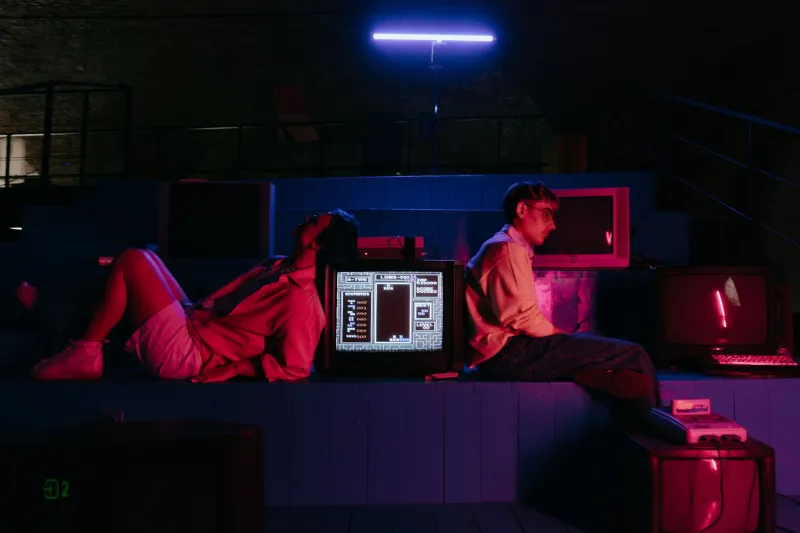
There's a particular kind of grief that doesn't have a name yet. It's the feeling you get when you open your phone one morning and the app icon is just gone — replaced by a terse message about a service discontinuation, maybe a thank-you note from a founder who sounds suspiciously upbeat for someone who just torched their own creation. The servers are cold. The community is scattered. And whatever weird little world you built inside that thing is vapor now.
For most people, that's the end of the story. For a growing, quietly passionate corner of the internet, it's the beginning of one.
The Graveyard Has a Curator
Call them digital preservationists, failed-startup archaeologists, or just people with very specific hyperfixations — whatever the label, they're out there. Forums, GitHub repositories, Discord servers, personal websites with names like AppObit and DeadStack are filling up with the remnants of platforms that most people barely remember existing. Vine. Yik Yak. Mixer. Google+. Ello. Peach. The list is long and strange and gets longer every year.
The work looks different depending on who's doing it. Some people focus on screenshots — thousands of them, organized by platform, date, and feature. Others fork the last public code commits before a repo went private, annotating what worked and what didn't like they're performing an autopsy. A few track down former users and conduct what amount to oral histories: what did you love about it, what did it give you that nothing else did, where did you go when it died.
It's obsessive in the best possible way. And it's also kind of profound.
Why Anyone Bothers
The obvious question is why. These weren't beloved institutions. Most of them were apps that lived and died within a two-year window, funded by venture capital, killed by a pivot or an acquisition or just the slow bleed of user indifference. Why does anyone care enough to build a monument to, say, a social platform that peaked at 40,000 users before getting quietly absorbed into a larger company that immediately shut it down?
The answer, if you spend any time in these communities, is surprisingly layered.
Part of it is personal. People formed real connections on these platforms — friendships, creative partnerships, communities that genuinely mattered to them. When the app goes dark, those connections don't automatically transfer. The shared context disappears. Preserving the artifact is a way of preserving proof that it was real, that the time spent there meant something.
But there's also something more intellectual going on. Failed apps are, in a weird way, more honest than successful ones. A platform that peaked and died didn't have time to become what it was never meant to be. It didn't get enshittified by advertiser pressure or scaled into something unrecognizable. It exists in amber, exactly as weird and specific and human as it was on its best day. Studying it tells you something true about what people actually wanted from the internet at that particular moment — something the survivors, bloated and optimized, have long since forgotten.
The Anatomy of a Digital Death
Preserving a dead app isn't as simple as taking a few screenshots. The archivists who do this seriously will tell you that digital death happens in stages, and each stage destroys something different.
First the servers go dark — user data, posts, profiles, all of it inaccessible. Then the app gets pulled from the stores. Then the website redirects to a holding page, or just goes blank. Then the domain lapses, and whatever was there gets swallowed by a parking page or a squatter. Then the Wayback Machine snapshots start to degrade, or the links rot, or the embedded media stops loading. It's a slow erasure, and it happens faster than most people realize.
The people fighting this have developed a rough triage system. Code repositories get forked immediately, before a company can make them private. Screenshots get uploaded to Internet Archive mirrors. User testimonials get collected while the community is still findable, before everyone disperses to other platforms and the specific memory of the thing starts to blur.
Some of the more technically inclined have gone further — spinning up local instances of open-source platforms to recreate the experience, or building browser extensions that restore the visual design of defunct apps when you load their archived pages. It's painstaking, often thankless work. Most of it will never be seen by more than a few hundred people.
What Gets Lost When Nothing Gets Saved
Here's the thing that keeps these archivists up at night: most digital history is just gone. Not archived somewhere obscure — gone. The early web, the weird experimental social platforms of the mid-2000s, the first wave of mobile apps — huge swaths of that history exist only in the fading memories of people who were there. Once they're gone, the record disappears with them.
This matters more than it sounds like it should. The history of the internet is the history of how we communicate, how we build community, how we express ourselves and misunderstand each other and occasionally, accidentally, make something beautiful. Losing that history means losing a mirror. It means future generations won't be able to look back and understand what the internet was actually trying to be before it became what it is.
Failed startups are a particularly rich part of that record, precisely because they failed. They represent paths not taken, experiments that didn't scale, communities that couldn't survive contact with the market. They're the internet's rough drafts, and rough drafts are often where the most interesting ideas live.
The Strange Comfort of Remembering
Spend enough time in these preservation communities and you start to notice something unexpected: they're not sad places. There's genuine warmth in them, a kind of nostalgia that isn't quite melancholy. People share their favorite memories of dead platforms the way you'd share stories about a bar that closed or a record store that didn't make it — with affection, with humor, with the particular fondness you reserve for things that mattered to you before the world got to them.
There's also, underneath all of it, a quiet argument being made. By refusing to let these things disappear completely, the archivists are pushing back against the assumption that what survives is what deserved to survive. That the platforms still running are running because they were the best ideas. That failure is just failure, with nothing worth learning from it.
The graveyard, it turns out, is one of the more interesting places on the internet. Strange, a little melancholy, full of things that almost were. Which, depending on your perspective, makes it either the saddest corner of digital culture or the most honest one.
Probably both.

