Fence Posts and Sun Angles: The Photo Sleuths Who Turn Any Snapshot Into a Set of Coordinates
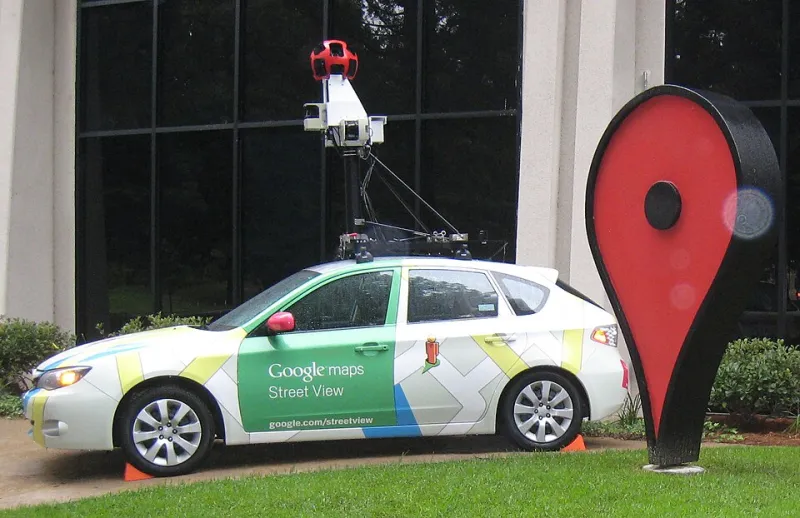
Photo: Kowloonese at English Wikipedia, Public domain, via Wikimedia Commons
The photo shows nothing much. A two-lane road, a telephone pole, a smear of trees on the horizon. No signs, no landmarks, no faces. Within eleven minutes, someone in the replies has pinned it to a stretch of Route 9 in rural Vermont, roughly between two crossroads, and they can explain exactly how they knew.
Welcome to the world of GeoGuessr sleuthing — a subculture born from a browser game and matured into something the game's creators never quite anticipated.
A Game That Escaped Its Own Box
GeoGuessr dropped players into a random Google Street View location and challenged them to guess where on Earth they were standing. Simple premise, addictive execution. But somewhere along the way, a segment of players stopped treating it like a game and started treating it like a discipline.
They built meta-knowledge that borders on the encyclopedic. Which countries paint their utility poles a specific shade. Which regions of the Philippines use a distinctive curb style. How the angle of the sun in a photo can narrow a location to a band of latitude. There are players who can distinguish Serbian from Croatian road markings at a glance, and they're often teenagers.
The game's competitive scene — yes, there are world championships, and yes, an American teenager named Jack Dougherty won the 2023 edition — gets the headlines. But the more interesting story is what happened when the skill set leaked out of the arena.
From Leaderboards to Open-Source Investigation
The same techniques now power a loose network of amateur analysts who locate things for free. When Reddit threads pop up with "find this photo" requests, they get solved — a grandfather's 1960s fishing trip, a stolen car caught on a doorbell camera, a scammer's fake backdrop exposed as a hotel parking lot in New Jersey.
More seriously, the community has contributed to actual news events. During the early days of the war in Ukraine, open-source investigators used these exact skills to geolocate footage, verify claims, and debunk fakes. Journalists at outlets like Bellingcat had been doing this professionally for years, but the talent pipeline running through gaming forums made the whole field bigger, faster, and younger.
And that's where things get uncomfortable.
When the Game Has Real Stakes
A geolocation that identifies a scammer is satisfying. A geolocation that identifies a random person — a protest attendee, an anonymous poster, someone's ex — is something else entirely. The tools don't distinguish between the two. A technique honed on Street View meta doesn't care whether the target is a missing person or a private citizen who said something dumb online.
The community's most respected figures tend to talk openly about ethics: don't geolocate people's homes, don't assist harassment campaigns, don't hand coordinates to people who will use them. But norms in a decentralized forum are enforced by vibes, not bylaws. Every so often, a thread surfaces where someone crossed the line, and the moderators of a Discord server have to decide what their hobby is actually for.
There's something almost poetic about it. The skill was born from a game about wandering the Earth aimlessly. Now it's used to make sure no one, anywhere, can wander anonymously — at least not in a photo someone else took.
Why Dirt Is a Tell
Ask a top player how they do it and they'll light up about the weird stuff. Soil color. Vegetation zones. The fact that Kenya uses a particular style of painted rock that no neighboring country copies. Camera generation — the visible hardware differences between Google's car-mounted cameras across years — can date a Street View image the way dendrochronology dates a tree.
It's expertise with no institution behind it. No degree, no certification. Just thousands of hours of staring at roadsides and comparing notes with strangers who care about the same absurd details. In an era where everything is supposed to be optimized and monetized, there's something refreshingly pointless — and quietly formidable — about a hobby whose entire output is knowing things.
The next time a photo surfaces from nowhere and someone claims to know exactly where it was taken, don't bet against them. They've been training for this their whole internet life.