When the Stream Dies, They Hit Record: The People Saving Every Glitch, Crash, and Frozen Frame
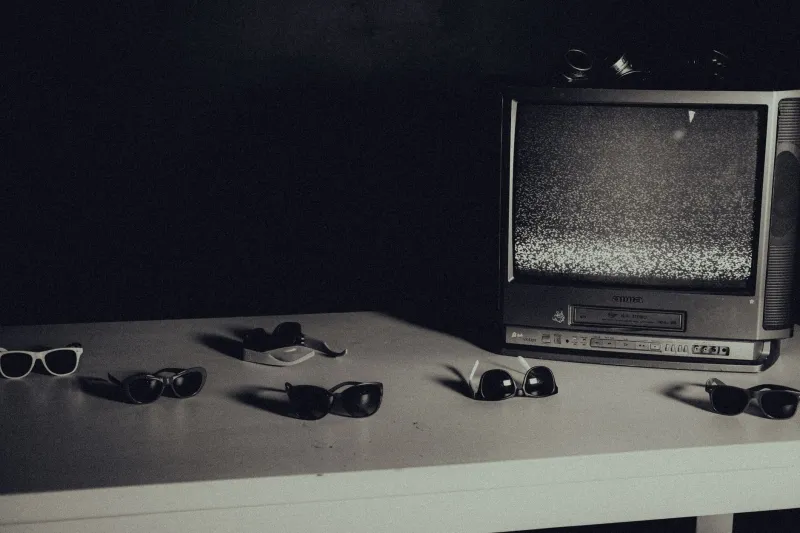
There's a very specific sound a Twitch stream makes when it's about to die. The audio warps, stretches into something low and inhuman. The video locks on a single frame — maybe someone mid-blink, maybe a game frozen at a moment that looks almost symbolic in retrospect. Then: nothing. The chat keeps scrolling for a few seconds, people typing question marks into the void, before the platform finally admits the broadcast is gone.
Most people close the tab. A small number of people immediately start downloading whatever fragment survived.
The Archive Nobody Asked For
Call them glitch archivists, failed broadcast collectors, or just deeply particular internet people — there's a loose community scattered across Discord servers and niche subreddits that has spent years hoarding the streaming world's most embarrassing, broken, and forgotten moments. Not the drama clips. Not the viral fails. The genuinely mundane disasters: a three-hour cooking stream where the audio desynced forty minutes in and nobody noticed. A speedrun attempt that ended when the runner's router died mid-load screen. A charity event that crashed so completely the host had to finish via cell phone audio, their voice sounding like it was coming from the bottom of a lake.
These aren't clips anyone is posting to Twitter for laughs. They're documents. At least, that's how the people saving them tend to describe the project.
"Most of streaming culture is about the highlight," says one collector who goes by the handle Vestibule_Fog and maintains a personal archive of over 400 failed or corrupted broadcasts. "The funniest moment, the biggest donation, the most insane play. But the failure is more honest. A glitch doesn't perform for you. It's just what happened."
What Gets Saved and Why
The criteria for what makes a failed broadcast worth archiving varies pretty wildly depending on who you ask. Some collectors are drawn to the purely technical — streams where the encoding software collapsed in interesting ways, producing video artifacts that look almost painterly. Blocky, pixelated ghosts of whatever was on screen. Colors that bleed outside their borders. Faces that smear into abstraction.
Others are more interested in the human element: the streamer's reaction to the disaster, or the strange community that forms in a chat when the broadcast breaks and everyone is just sitting there together, waiting, typing into a feed that may or may not be going anywhere.
"There's this chat behavior that only happens during outages," says another archivist, who asked to be identified only as Maren. "People start talking to each other differently. The parasocial thing drops. They're not performing for the streamer anymore because the streamer is gone. For like five minutes, it's just people in a room."
Maren keeps a folder specifically dedicated to what she calls "orphan chats" — the scrolling text logs from streams where the broadcast died but the chat room stayed open and active for an extended period. In one, a community of several hundred people spent forty-five minutes talking about their actual lives while waiting for a Minecraft streamer to come back online. The streamer never did. The chat eventually dissolved. Maren saved the whole thing.
The Fragility Is the Exhibit
There's a philosophical undercurrent running through this community that connects it to broader conversations about digital preservation — but with a twist. Most archival efforts focus on saving things that were good, or at least finished. The Internet Archive exists to preserve the web's intended content. What these collectors are doing is almost the inverse: preserving the moments when the technology stopped pretending to work.
"The internet presents itself as seamless," Vestibule_Fog says. "Every platform is designed to make you forget that it's all just cables and code and servers that get too hot. A crashed stream is the curtain falling. I think that's worth keeping."
This framing — the glitch as honest document, the failure as artifact — isn't entirely new. Glitch art has been a recognized aesthetic movement for decades, and academics have written seriously about error as a form of digital truth-telling. But what this community is doing feels less like art production and more like field documentation. They're not making the glitches. They're just refusing to let them disappear.
The Platforms Don't Help
Streaming services are, predictably, not designed with any of this in mind. Twitch deletes VODs on a rolling basis. YouTube removes streams that violate terms of service, which can include streams that ended abnormally. Failed broadcasts often don't generate a complete file at all — they have to be reconstructed from fragments, sometimes captured in real time by someone who happened to be recording their own screen.
This makes the preservation effort genuinely labor-intensive. Maren describes checking a list of streamers she monitors specifically because they have unstable setups — old PCs, bad internet connections, a history of technical chaos — and manually capturing broadcasts that seem like they might not survive the week.
"It's not glamorous," she admits. "I'm watching a stream about someone reorganizing their apartment and I've got OBS open just in case their internet cuts out in an interesting way. That's my Friday night sometimes."
What This Looks Like as a Collection
The archives themselves are mostly private or semi-private — shared in Discord servers with small membership counts, or kept on personal hard drives that haven't been organized into anything publicly accessible. There's no Museum of Failed Livestreams with a website and a donation button, at least not yet. The community operates more like a network of enthusiasts swapping finds than an institution with a mission statement.
But within that informal structure, there are genuine curation decisions happening. Vestibule_Fog has organized his archive by failure type: encoding errors, connection drops, hardware deaths, software crashes, and a category he calls "ambient decay," which covers streams that didn't fail dramatically but degraded slowly over time, quality dropping increment by increment until what remained was barely recognizable as video.
That last category is, he says, his favorite. "It's the slow ones that get to me. You can watch a stream go from fine to completely broken over the course of an hour and nobody noticed while it was happening. The streamer kept talking. The chat kept scrolling. The whole thing was falling apart and everyone just kept going."
There's something in that description that feels like it's about more than video files. The stream kept going. The failure was invisible until it wasn't. The archive exists so that at least someone can look back at the exact moment things started to slip.
Whether that's preservation, art, or just a very specific kind of grief is probably a question each collector answers differently. But the hard drives keep filling up, and somewhere right now, a stream is dying in a way someone will think is worth saving.