Dead Air, Living Debate: Inside the Quiet War Over America's Emptiest Airwaves
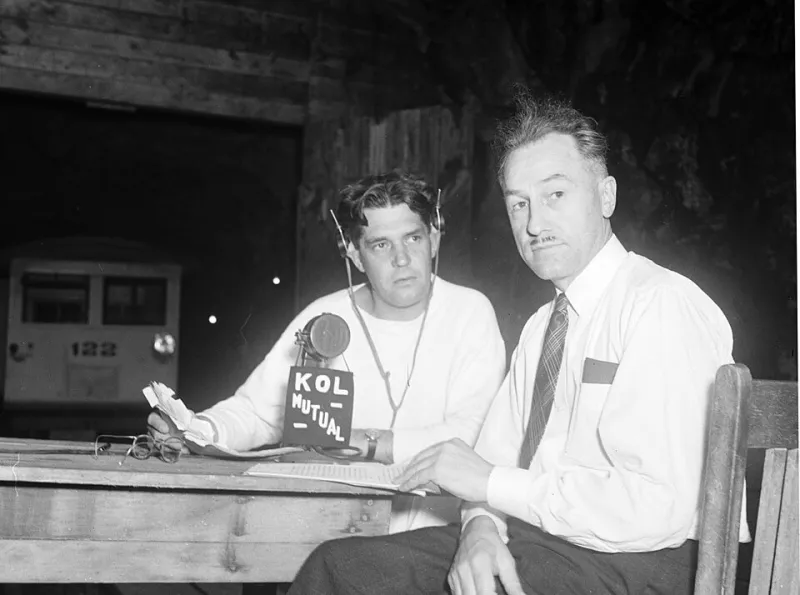
Photo: Seattle Municipal Archives, CC BY 2.0, via Wikimedia Commons
Spend enough time in the wrong corners of radio forums and you'll find a recurring argument that sounds, at first, like a dispute about nothing: what, exactly, should happen to the AM and FM bands as commercial stations surrender their licenses in record numbers?
It is not a dispute about nothing. It's a dispute about who owns the idea of infrastructure.
The Great Unwinding
The numbers tell the story. Hundreds of AM stations have gone dark or gone silent over the past decade, their frequency allocations quietly sold, repurposed, or left to hum into static. FM isn't far behind in some rural markets. Each sale frees up spectrum — the invisible real estate of the electromagnetic dial — and spectrum is valuable to telecom giants who want it for cellular broadband.
To an economist, this is efficient reallocation. To the people who've spent their lives around broadcast towers, it's something closer to demolition.
Meet the Coalition Nobody Planned
The resistance is not an organization. It's an accidental alliance.
There are the preppers, who regard over-the-air broadcast as the last communication layer that works when the grid doesn't — no cell towers, no internet backbone, just a transmitter and anyone with a battery radio. There are the ham radio lifers, for whom the AM band is a museum they can still transmit in. There are the former FCC employees, now retired and armed with decades of regulatory memory, who write 4,000-word comments on docket proceedings that exactly four other people will read. And there are the volunteer operators — often retired engineers — who keep tiny rural stations alive out of pocket, broadcasting classical music, grain-market reports, and church services to a county's worth of listeners, some of whom may be tractors with the radio on.
They do not agree with each other on much. They agree that the dial emptying out is a loss that no one is pricing correctly.
The Regulatory Rabbit Hole
Dive into the actual FCC filings and you enter a world of astonishing granularity. Comment threads dissect propagation curves at night versus day. There are genuine, heated arguments about whether AM's skywave propagation — the way signals bounce off the ionosphere after dark — constitutes 'wasted' spectrum or a national asset.
One recurring figure in these debates is the hobbyist-turned-expert: someone who started by restoring a 1962 console radio and ended up filing technically sophisticated opposition to a license transfer. The barrier to entry isn't credentials. It's patience. And this community has patience to burn.
Nostalgia or Foresight?
The easy dismissal is that this is nostalgia — old men defending a technology that streamed audio made obsolete decades ago. And some of it is nostalgia, sure. Nobody pretends the farm report has a mass audience.
But the preppers have a point that's hard to wave away. Every communication system we've built since requires shared infrastructure that can fail, be shut down, or be switched off by a company in another state. Broadcast is dumb in the most resilient way: one transmitter, infinite receivers, no network to collapse. In an era of hurricanes, wildfires, and increasingly fragile digital dependencies, 'a signal that just goes out to everyone' starts sounding less like the past and more like a backup plan nobody maintained.
Keeping the Lights On For Nobody
The strangest and most affecting part of this subculture is the volunteer station. A retired broadcast engineer in the Dakotas keeping a low-power FM signal running classical music for a listening audience he cheerfully admits might be in the dozens. He does it because the license exists, the tower holds, and stopping would mean the frequency goes quiet — possibly forever.
Is that sentimental? Completely. Is it pointless? Ask him after the next ice storm takes out the cell network for a week, and every car radio still works.
The dial is emptying. The argument about what that means is only getting louder — at least among the handful of people still listening.