Your For You Page Is Not a Therapist: On TikTok's Mental Health Industrial Complex
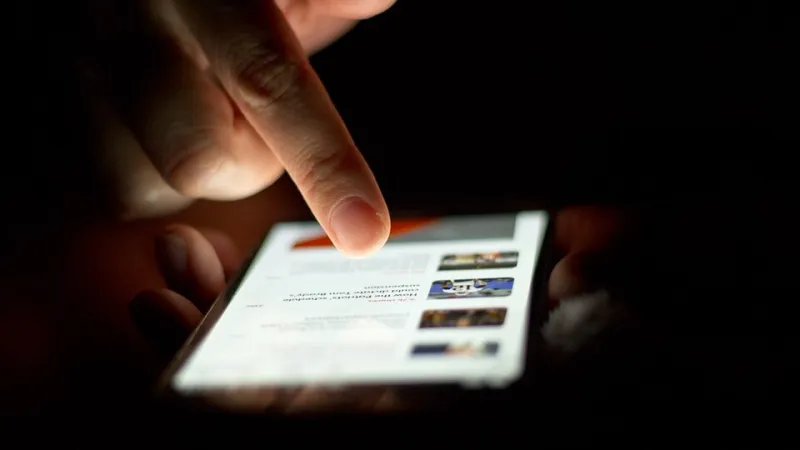
Photo: Japanexperterna.se, CC BY-SA 2.0, via Wikimedia Commons
Somewhere on TikTok right now, a 22-year-old with a ring light and a trauma narrative is explaining your childhood to you. She's not a therapist. She might have a psychology degree, or she might not — it's hard to tell because the platform doesn't require disclosure. What she definitely has is 2.3 million followers, a comment section full of people saying "this is literally me," and an algorithm that keeps serving her content to exactly the people most likely to feel seen by it.
This is the TikTok mental health pipeline, and it's one of the weirder and more consequential things happening in American digital culture right now.
The Intimacy Machine
Let's start with what makes this phenomenon feel so different from, say, a self-help book or a daytime talk show segment about anxiety. TikTok is engineered for parasocial intimacy at a scale nothing else has achieved. The vertical format, the direct address to camera, the confessional tone that the platform rewards with engagement — all of it creates the sensation of being talked to, not talked at.
When a creator looks into their phone camera and says "if you had a parent who did X, you probably grew up feeling Y," it doesn't feel like content. It feels like a conversation. It feels like someone who knows you. The platform's recommendation algorithm makes it feel even more personal — after all, this video found you, out of everything that exists on the internet. Surely that means something.
It doesn't mean anything. It means you watched three videos about anxiety last Tuesday and the system took note. But the feeling is real, and that's what matters to the people experiencing it.
The Diagnosis Scroll
The specific flavor of mental health content that has exploded on TikTok tends toward the diagnostic. ADHD. CPTSD. Attachment theory. Narcissistic abuse. Rejection sensitive dysphoria. These terms — some clinical, some quasi-clinical, some genuinely contested within psychology — circulate through the platform's mental health ecosystem with the velocity of memes.
A user might encounter a video explaining the "signs you have ADHD" and feel a jolt of recognition. Then the algorithm serves them more. And more. Within a week, they've built an entire explanatory framework for their life around a self-diagnosis they arrived at through a content spiral, reinforced at every step by an engagement system that rewards the content that produces the strongest emotional response.
This isn't entirely without value. A lot of people — particularly women, who have historically been underdiagnosed with conditions like ADHD — have genuinely been pointed toward helpful diagnoses and real treatment by something they first encountered on TikTok. Destigmatization is real. The language to describe your experience has to come from somewhere.
But there's a meaningful difference between "this video gave me language for something I was already experiencing" and "this video told me who I am." The platform has a hard time distinguishing between those two things, and so do the users on it.
What Actual Therapy Can't Compete With
Here's the uncomfortable structural reality: for millions of young Americans, TikTok mental health content isn't a supplement to therapy. It's a replacement for it — not by choice, but by necessity.
Therapy in the US is expensive, hard to access, often not covered by insurance, and involves a waitlist that can stretch for months. TikTok is free, available at 2 a.m. when the anxiety peaks, and delivers something that feels like emotional support immediately. The comparison isn't fair to either, but the practical calculus isn't hard to understand.
The creators filling this gap aren't necessarily doing anything malicious. Many of them are genuinely trying to help, sharing their own experiences with mental health challenges in ways that connect with people who feel isolated. The problem isn't bad intent. It's the mismatch between what the platform can deliver and what the audience actually needs — and the way the engagement mechanics blur that distinction.
A creator gets rewarded for content that makes people feel understood. Feeling understood is not the same as getting better. Naming your trauma is not the same as processing it. The platform optimizes for the former in both cases, and users don't always have the framework to notice the difference.
The Vulnerability Exploit
There's a harder thing to say here, and it's about how the platform profits from this dynamic.
TikTok's engagement model runs on emotional activation. Content that produces strong feelings — recognition, validation, the specific pleasure of feeling like someone finally gets it — performs better than content that doesn't. Mental health content, almost by definition, traffics in exactly those feelings. A person in genuine distress is a person primed to watch, comment, share, and return.
This isn't a conspiracy. It's just how the incentives align. The platform doesn't set out to exploit vulnerable users. It just builds systems that reward engagement, and then those systems find the content and audiences that generate the most of it. People in emotional pain engage deeply. The algorithm notices. The cycle continues.
The creators benefit too, in ways that can subtly shape their content. A video that validates a common experience performs better than one that complicates it. Nuance doesn't scale. The message that gets reinforced, over thousands of iterations, is: you are not okay, and here is why, and I understand. The message that gets deprioritized is: this is complicated, and you might need more than I can give you.
Finding Signal in the Noise
None of this means TikTok mental health content is uniformly bad or that the people creating it are frauds. Some creators are licensed clinicians. Some content is genuinely useful and responsibly made. The problem is that the platform gives users no reliable way to distinguish the careful from the careless, the qualified from the performatively relatable.
What's actually happening on TikTok's mental health side is a large-scale, uncontrolled experiment in what happens when you give a generation with limited access to real mental health resources a platform that simulates the feeling of receiving care. The results are mixed in ways that are hard to measure and easy to ignore.
The users scrolling at 2 a.m. aren't stupid. They know, on some level, that a TikTok video isn't therapy. But they're also lonely, struggling, and being served content that meets them exactly where they are. That's a powerful thing, even when — maybe especially when — it isn't quite what it looks like.
The For You Page found your signal. It just can't tell you what to do with it.