Static Is the New Algorithm: In Defense of Broadcasting Into the Void
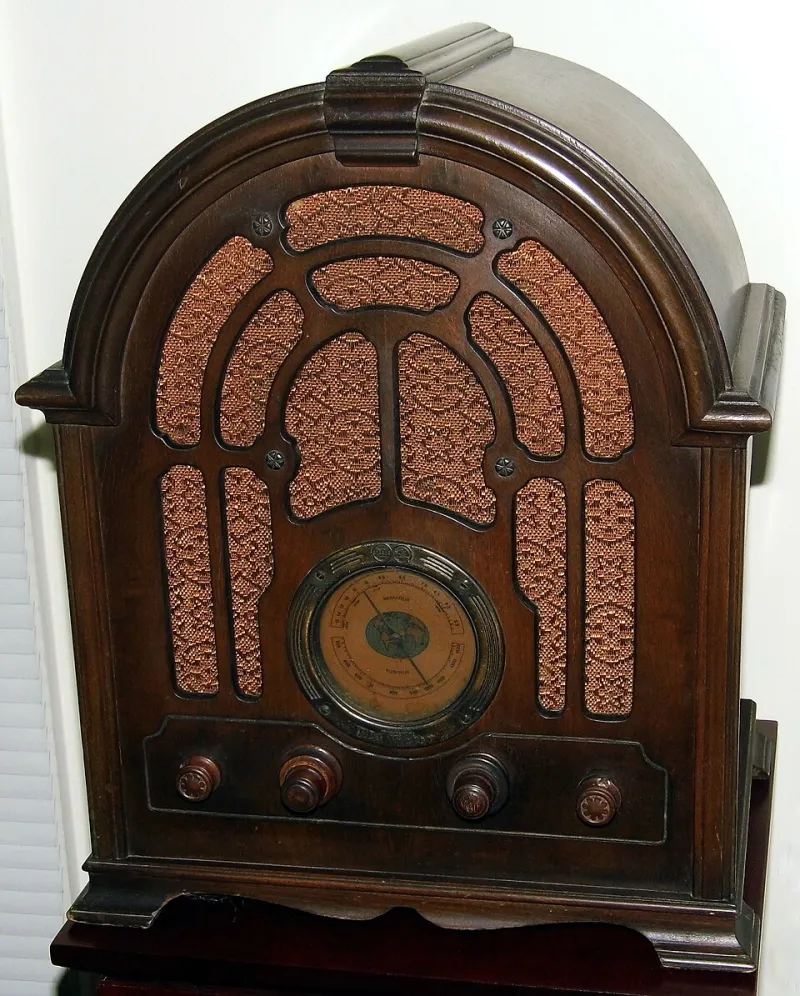
Photo: Joe Haupt from USA, CC BY-SA 2.0, via Wikimedia Commons
Here's a number I find myself thinking about: zero. As in, zero impressions, zero watch time, zero audience retention graphs. It's the total amount of data you get when you transmit a radio signal into the night and have no idea who, if anyone, is listening.
And I'd argue it's the most countercultural number on the internet right now.
The Strange Renaissance of One-Way Media
Gen Z was raised on the feed — infinite, personalized, measured to the millisecond. Every piece of content they've ever consumed came with an implied transaction: attention in exchange for optimization. The algorithm knows what you watched, for how long, and at what point you scrolled away.
So naturally, some of them have ended up on YouTube at 2 a.m. listening to a shortwave receiver pick up a numbers station — a robotic voice reading digit strings to nobody, a Cold War spy tradition that never fully died. Or tuning a software-defined radio app to ham frequencies. Or following the ongoing saga of pirate FM stations run out of garages in places like Brooklyn and the UK, some of which have quietly run for decades.
The appeal makes sense once you name it. Broadcast media has no feedback loop. The station cannot see you. There is no profile, no recommendation, no metric that turns your listening behavior into someone else's revenue. You either catch the signal or you don't, and the signal doesn't care.
Metrics Made Us Weird
I want to be direct about what I think audience analytics did to us. It turned every creator into a performance and every audience member into a data point being A/B tested. Creators talk openly about "retention curves" and "hook rates" the way a casino talks about floor layout. Listeners, in turn, learned to feel watched even when alone with their headphones — because they always, in a real sense, are.
Broadcasting into the void breaks that loop completely. A numbers station operator has no idea if their audience is three people, three hundred, or a single radio enthusiast in rural Montana. That ignorance is a kind of freedom, for sender and receiver both. The content exists because someone wanted to make it, full stop. Nobody is optimizing the static.
Honest Uncertainty
There's also something philosophically honest about it. On-demand media pretends the world is a library where everything is available at all times. Broadcast media tells the truth: things happen once, you're there or you're not, and much of the world's communication happens without you.
It's the same itch that made ephemeral content and disappearing messages appealing — the relief of impermanence. Except radio has been impermanent for a century, without needing an app to enforce it.
I don't think shortwave is coming back, and I'm not romanticizing the technical reality — most number stations are probably intelligence traffic, and pirate radio is, well, illegal. But the cultural migration is real. People who grew up under total measurement are seeking out the one medium that cannot measure them back.
The static isn't dead air. It's the sound of a medium that doesn't know you're there — and for a generation raised on being known, that might be the most comfortable silence available.