You're Not Their Friend: How the Internet Monetized the Feeling of Being Known

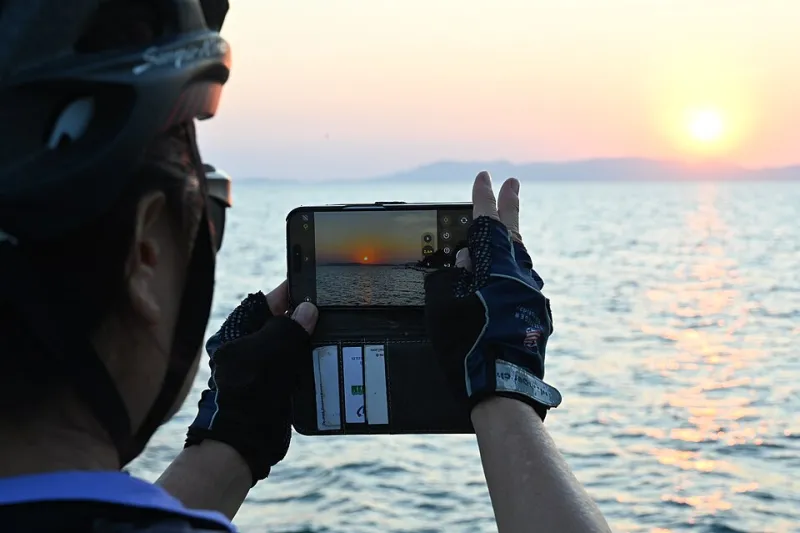
Photo: Susanne Nilsson from Trelleborg, Sweden, CC BY-SA 2.0, via Wikimedia Commons
There's a specific moment a lot of people recognize when they think about it. You hear some piece of news — a breakup, a health scare, a dramatic fallout — and your stomach drops. You feel genuinely bad. Then, a few seconds later, you remember that you have never actually spoken to this person. You don't know their middle name. They don't know you exist. And yet something in your chest still aches like it does when a real friend is hurting.
That's the signal Izatioth runs on — the weird, glitchy, deeply human corners of digital life. And right now, few corners are stranger or more profitable than this one.
The Architecture of Fake Closeness
Parasocial relationships aren't new. Psychologists coined the term back in 1956 to describe the one-sided emotional bonds audiences form with television personalities. What's different now is scale, precision, and intent. Early TV was a broadcast medium — it pointed at you. Modern platforms are something else entirely. They are feedback loops built to study what makes you feel seen and then serve you more of it.
YouTube figured out early that creators who talked directly into the camera — not performing, not presenting, just talking — held attention longer. The "talking head" format that dominates the platform isn't accidental. It mimics the visual grammar of a private conversation. Your brain, which didn't evolve to distinguish between a screen and a living room, responds accordingly.
TikTok refined this even further. The platform's algorithm doesn't just learn what content you engage with — it learns what emotional register keeps you watching. A creator who makes you laugh gets some of your time. A creator who makes you feel like they understand something about you specifically gets a lot more of it. The For You Page isn't just a recommendation engine. It's a compatibility test between your emotional needs and the content most likely to meet them.
Billion-Dollar Intimacy
The business model here is worth slowing down on, because it's genuinely strange once you name it out loud.
When a streamer on Twitch sets up a subscription tier, they're not just selling access to content. They're selling proximity. A $5 sub gets your name read aloud. A $25 sub gets a custom emote. Some platforms have tiers where creators will record personalized voice messages or respond to DMs. Cameo built an entire company on this premise — the idea that a few seconds of a semi-famous person acknowledging your existence has real monetary value. And it does. People pay for it constantly.
Patreon, OnlyFans, Substack — the defining characteristic of every major creator monetization platform of the last decade is that they don't just sell content. They sell the sensation of a relationship. The language is everywhere once you start noticing it. "Join my community." "Be part of the inner circle." "You're why I keep doing this."
None of it is necessarily cynical. Plenty of creators genuinely care about their audiences. But the infrastructure doesn't require sincerity to function. The feeling of closeness is the product whether or not the closeness is real.
What Happens When It Breaks
The cracks show up in predictable ways. A creator goes through a public controversy and their most devoted fans feel personally betrayed — not because they were actually wronged, but because the relationship they believed in turned out to be one-directional all along. The grief is real even if the friendship wasn't.
Some creators are more honest about this than others. A number of mid-sized YouTubers have started building what they call "parasocial literacy" into their content — openly acknowledging to their audiences that the intimacy feels real but has limits. One gaming creator with a few million subscribers described it in a video as "the kindest thing I can do for the people who watch me." The video itself went viral, which is its own kind of irony.
Then there's the other side: creators who lean into the dynamic so completely that the line between persona and person disappears entirely. Some ASMR channels, certain "study with me" streamers, and a chunk of lifestyle vloggers have built audiences specifically on the premise that watching them is a form of companionship. For viewers who are isolated — and a significant portion of heavy internet users are — that's not a small thing. It fills a real gap.
The Loneliness Infrastructure
Here's the uncomfortable thread running through all of this: parasocial relationships are thriving because loneliness in America is also thriving. The U.S. Surgeon General declared a loneliness epidemic in 2023. Rates of social isolation have been climbing for decades. People have fewer close friends, spend less time in community spaces, and report lower feelings of being understood than previous generations.
Into that gap stepped an entire industry. Not maliciously — or at least not entirely maliciously. But the incentives align neatly. Lonely people are highly engaged users. Highly engaged users are the most valuable users. Platforms that make lonely people feel less lonely get more of their time and money. The algorithm didn't create the loneliness, but it learned very quickly how to make a profit from it.
That's the signal worth tuning into here. Not that parasocial bonds are shameful or that the people who form them are somehow naive. Most of us have them in some form. The stranger question is what it means that we've built a multi-billion dollar economy around simulating connection — and what we're actually getting in return.
The screen keeps talking. You keep listening. Somewhere in that loop, someone is getting very, very rich off the feeling that you're not alone.