Basement Show, Browser Tab: Where the Smallest Gigs Are Happening Now
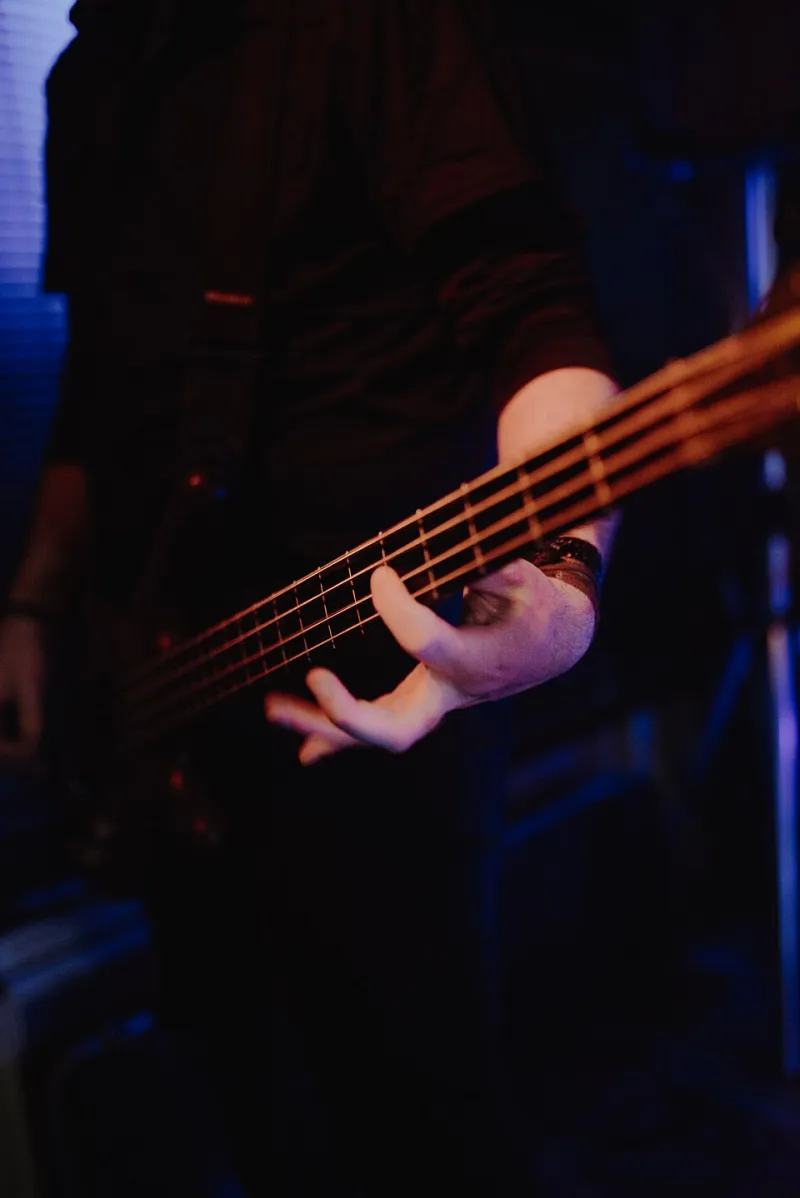
Photo: Shixart1985, CC BY 2.0, via Wikimedia Commons
The last real basement show I heard about was in a Discord server dedicated to experimental folk music from the Pacific Northwest. There were eleven people in the voice channel. The musician, somewhere in Portland, was playing an acoustic guitar through a Blue Yeti microphone into her laptop, and the chat was moving at a pace that felt more like a living room than a comment section. Someone asked about the tuning. She stopped mid-song to explain it. A few people shared timestamps of their favorite moments in real time.
No cover charge. No sound guy. No venue cut. No opening act that nobody asked for.
This is where live music went when the math stopped working everywhere else.
The Venue Problem Nobody Fixed
The economics of small live music venues in the US have been broken for a long time, and the pandemic didn't create the problem so much as it finished it off in a lot of cities. Rent went up. Insurance went up. The three-drink-minimum model stopped covering costs when foot traffic became unpredictable. Booking agents got cautious. Smaller acts — the ones who could fill a 150-capacity room but not a 500-seat theater — got squeezed out of a middle tier that was already thin.
What replaced it wasn't some elegant industry solution. It was a bunch of individual musicians doing whatever worked, and a surprising amount of what worked happened to be online and deeply weird and surprisingly intimate.
Not Twitch exactly, though some musicians found a home there. Not Instagram Live exactly, though some still use it. The more interesting stuff happened in smaller, more specific containers — private YouTube streams shared only with newsletter subscribers, Discord servers built around a single artist or a tight-knit genre, Reddit communities where someone posts a link to a performance with almost no promotion and forty people show up because they were already there.
The Discord Circuit
If you spend any time in niche music communities online, you've probably bumped into this ecosystem without fully registering it. There are Discord servers for ambient music, for Appalachian folk, for lo-fi jazz, for experimental noise, for bedroom pop, and for genres that don't have names yet. A lot of them have a channel called something like #live-shows or #performances where artists drop in and play.
The audiences are tiny by any conventional measure. Fifteen people. Thirty people. Sometimes fewer. But the engagement density is unlike anything a mid-sized venue can replicate. When there are only twenty people watching, every comment lands. Every reaction is visible. The performer and the audience are in actual dialogue in a way that gets physically impossible once a room holds more than a hundred bodies.
Musicians who have played both describe something that sounds almost disorienting — the experience of being heard rather than just attended. One indie folk artist who plays regularly in a Discord server for fans of Appalachian-influenced music described it to a community newsletter as "the closest thing to playing in someone's kitchen that doesn't require me to drive four hours."
The Subreddit Stage
Reddit's role in this is underappreciated and kind of fascinating. Subreddits dedicated to specific genres or regional music scenes have quietly become announcement boards, performance spaces, and archives all at once. A musician posts a link to a livestream. The thread fills with timestamps and questions. The stream gets saved. Someone finds it six months later and the conversation starts again.
This is different from the Discord model in one key way: it's semi-public and searchable. The intimacy is lower but the discoverability is higher, which means it functions more like a traditional show in the sense that strangers can wander in. The r/WeAreTheMusicMakers community, for instance, has hosted informal performance threads that function like open mic nights with a global guest list and no closing time.
What both platforms share is a rejection of the attention economy's standard logic. These performances aren't optimized for algorithmic spread. They're not trying to go viral. They're trying to reach the specific people who already care, and they're doing it through channels that the recommendation engines mostly ignore.
Free, But at What Cost
Here's where it gets complicated, because the word "democratic" gets thrown around a lot in conversations about this stuff and it deserves some pressure.
Yes, any musician with a laptop and a decent microphone can reach a dedicated audience without paying venue fees or dealing with a booking agent who's only interested in acts with 10,000 monthly Spotify listeners. That's genuinely new and genuinely significant. The barrier to performance has dropped in a real way.
But the economics haven't disappeared, they've just shifted. Musicians playing Discord servers and Reddit streams are still largely uncompensated for their time. The intimacy of these platforms makes it socially awkward to ask for money in the same way a ticketed show would. Tip jars exist — Venmo links in stream descriptions, Patreon pages mentioned at the end of sets — but the conversion rate is low and the amounts are small. The audience that cares the most is often the audience least likely to have disposable income.
There's also a visibility paradox built into the whole thing. The features that make these performances feel authentic and intimate — the small audience, the informal setting, the platform obscurity — are the same features that keep them invisible to the wider music industry. A musician can build a genuinely devoted following of three hundred people across these spaces and still be effectively unknown in any context that translates into a booking or a label conversation or a press mention.
The Signal in the Noise
What's happening in these corners of the internet isn't a replacement for the venue ecosystem. It's something different — a parallel infrastructure that operates on different values and serves different needs. The musicians playing Discord sets at midnight for a dozen devoted listeners aren't trying to make it. A lot of them already decided that making it looks like something they don't want.
That's not resignation. That's a genuine reorientation around what music is for. In a culture where every creative act is supposed to be a stepping stone toward scale and monetization, choosing to play for twelve people who will remember every note is a quietly radical position.
Izatioth has always been interested in the places where the strange finds its signal. This is one of them. Small, specific, largely invisible, and more alive than most of what's playing on the main stage.