Rotting in a Box, Living Forever Online: The Quiet War to Save Media Nobody Wanted
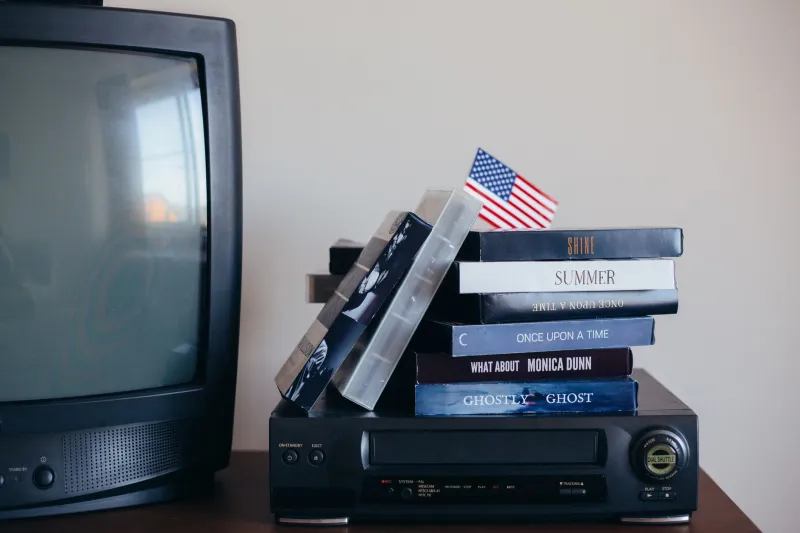
There's a VHS tape in a storage unit in Akron, Ohio, that contains the only known recording of a local news segment from 1987 about a shopping mall that no longer exists. Nobody famous is in it. Nothing historically significant happened. The mall sold waterbeds and Orange Julius. But to the person who found it, cleaned the mold off the cassette housing, and spent eleven hours coaxing it through a modified VCR, it might as well have been the Dead Sea Scrolls.
This is the world of dead media preservation — and it is stranger, more obsessive, and more quietly urgent than most people realize.
The Formats That Were Supposed to Disappear
When Sony killed Betamax in 2002, it wasn't exactly a funeral. Nobody held a vigil. The format had lost the format war to VHS decades earlier, and by the time the plug was pulled, it felt more like a formality than a tragedy. Same story with LaserDiscs, which peaked in the early '90s and slowly faded as DVDs ate the market. Floppy disks. Zip drives. MiniDiscs. HD DVD. The graveyard of consumer media formats is long, and most of us walked past it without looking twice.
But a scattered, loosely networked community of collectors, archivists, and what you might generously call "format archaeologists" refused to let the funeral happen quietly. They started buying up dead players on eBay. They learned to repair machines that haven't had replacement parts manufactured in thirty years. They built custom capture rigs from salvaged components. And they started digitizing — obsessively, systematically, sometimes at enormous personal cost — everything they could get their hands on.
"People think this is nostalgia," says one archivist who runs a Betamax digitization operation out of his garage in suburban Portland and asked to be identified only by his forum handle, VidVault88. "It's not nostalgia. I wasn't even born when half this stuff was made. It's more like — someone has to do it, and nobody official is going to."
The Decay Clock Nobody Talks About
Here's the part that gives the preservation community its edge of genuine urgency: physical media is dying. Not metaphorically. Chemically.
Magnetic tape — the stuff inside every VHS, Betamax, and audio cassette ever made — degrades through a process archivists call "sticky shed syndrome." The binder holding the magnetic particles to the tape breaks down over time, especially in environments with humidity fluctuations. The tape becomes literally sticky, shedding oxide onto the playback heads and destroying itself in the process of being played. The window to capture this stuff isn't infinite. For a lot of tapes manufactured in the '70s and '80s, that window is closing fast.
Optical media isn't immune either. "Disc rot" — the oxidation of the reflective layer in CDs and LaserDiscs — is real, and it's accelerating in discs that weren't stored properly. Some early CD pressings from the '80s are already unreadable. A LaserDisc that looked fine in 1995 might be half-gone by now.
The institutions that should care — studios, networks, archives — mostly don't. The Library of Congress does heroic work with a fraction of the resources the scale demands. But the overwhelming majority of content recorded on obsolete formats will never see the inside of a professional archive. If it gets saved, it gets saved by someone like VidVault88, working on a folding table next to a space heater.
What They're Actually Rescuing
Ask a preservationist what they're saving and the answers get interesting fast. Sure, there are people chasing legitimately rare items — unaired pilots, regional commercials, local access programming that documented American life in granular, unfiltered detail. But a lot of what gets rescued is, by any conventional measure, completely ordinary.
Local news. Public access cooking shows. Home recordings of birthday parties. Infomercials. Kids' birthday tapes where someone pointed a camcorder at a living room in 1991 and caught forty minutes of completely unremarkable suburban American life.
And yet — that's kind of the point. The stuff that gets officially preserved tends to be the stuff that was already considered important. What these collectors are chasing is the texture of ordinary life, the media that documented the culture nobody thought was worth documenting. The mall that's gone now. The car dealership jingle that played on local radio for fifteen years. The public access show hosted by a guy named Darrell who reviewed model trains every Sunday at midnight.
"The official record is always edited," says one member of the Jason Scott-adjacent Internet Archive community who catalogs floppy disk software from defunct '80s software companies. "What we find is the unedited version of history. The stuff that wasn't supposed to matter."
The Tension at the Center of All of This
There's a philosophical argument that runs through every corner of the dead media world, and it never quite gets resolved. Is this preservation? Is it hoarding? Is it art?
The answer is probably all three, in ratios that vary by person. Some archivists are methodical, metadata-obsessed, operating with the discipline of librarians. Others are more chaotic — buying up lots of tapes at estate sales, digitizing what looks interesting, letting the rest sit in stacks. Some openly admit they don't know why they do it, only that stopping feels wrong.
There's also a real tension around access. A lot of what gets digitized lives in private collections, shared only in small Discord servers or niche forums. The community has complicated feelings about uploading to public platforms — copyright is a genuine legal minefield even for content that the original rights holders have completely abandoned, and platforms like YouTube are increasingly aggressive about flagging material regardless of its actual legal status.
The Internet Archive remains the closest thing the community has to a spiritual home, a place where the ethos of "save everything, ask questions later" has institutional backing. But even there, the legal ground shifts constantly.
Why This Feels Like a Signal Worth Catching
In a media landscape defined by algorithmic curation and the ruthless pruning of anything that doesn't perform, the dead media preservation world is doing something quietly radical. It's insisting that value isn't determined by engagement metrics. It's saying that the stuff nobody clicked on still mattered to someone, somewhere, and that "nobody asked for this" is not a good enough reason to let it disappear.
There's something almost anti-algorithmic about the whole enterprise — the rejection of the idea that content only has worth if it can be monetized, recommended, or surfaced to an audience. A Betamax tape of a 1983 regional beauty pageant in Tulsa isn't going to go viral. It's not going to generate revenue. It's going to sit in a digital archive that maybe three hundred people know about, waiting for the one researcher or curious stranger who needs exactly that.
The people doing this work aren't waiting for permission or funding or cultural validation. They're just doing it, in basements and garages, with equipment that barely works, against a clock that's always running.
Somewhere right now, a tape is getting warm. Someone's racing it.