Organized Chaos: The Superfans Building Cathedrals Out of Spreadsheet Cells
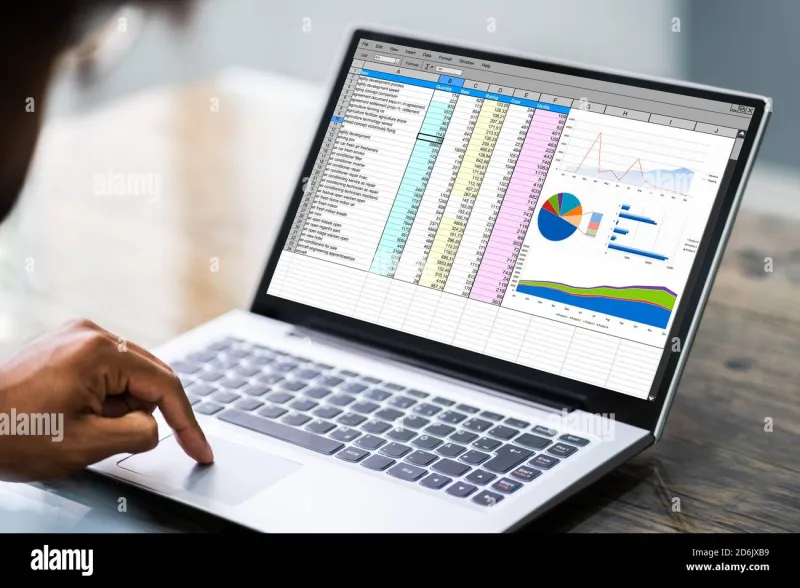
Photo: colorful spreadsheet data on computer screen close up, via c8.alamy.com
Somewhere right now, a fan is cross-referencing a fictional character's eye color across fourteen seasons of television and flagging the inconsistencies in a color-coded Google Sheet. These aren't casual viewers. These are the people who out-document the documentarians, and they've been doing it for years without anyone really noticing.
There's a specific kind of love that expresses itself through taxonomy. Most people don't understand it. The people who live inside it can't really explain it either. But spend enough time in the fandom underground — the Discord servers that require three levels of verification, the Reddit threads that are really just filing cabinets with comment sections — and you start to see the architecture everywhere.
The Database Is the Fan Fiction
When most people think about fandom obsession, they picture fan art or fan fiction. The creative stuff. The emotional stuff. What they don't picture is a 47-tab Excel workbook tracking every outfit a K-pop idol has worn to a public appearance since 2019, complete with brand attribution, color hex codes, and a running tally of which stylist was credited.
But that workbook exists. Multiple versions of it, probably.
These documents aren't fringe artifacts. They're central to how certain fan communities actually function. The spreadsheet becomes the shared text. It's the thing people cite, update, argue over, and eventually fork into competing versions when there's a schism about methodology. Sound familiar? It should. It's basically how open-source software communities operate, except the subject matter is whether or not a Marvel character canonically left-handed.
One longtime participant in a major TV fandom described her documentation habit this way: "I started tracking episode dialogue inconsistencies just for myself. Then other people wanted access. Then we had a whole committee for updates. Now there are people in the sheet I've never spoken to directly." The project had outlasted three showrunners and a network change.
Order as a Love Language
Here's the thing that's easy to miss from the outside: these databases are acts of devotion. The obsessive categorization isn't separate from the love — it is the love, expressed in the only language some people have for feelings that don't fit anywhere else.
Fandom scholars (yes, that's a real academic lane) have been talking about participatory culture for decades, but the spreadsheet phenomenon sits in a slightly different place. It's not quite creative transformation of source material. It's more like... aggressive stewardship. The fans who build these systems aren't reimagining the thing they love. They're preserving it at a resolution higher than the original creators ever bothered with.
And that detail matters. Because official wikis exist. Studios maintain them. Publishers fund them. But ask any serious fandom archivist and they'll tell you the official resources are incomplete at best, actively wrong at worst. The real knowledge lives in the community-maintained documents that no PR department has ever touched.
When the Map Gets Bigger Than the Territory
There's a point in some of these projects where something quietly strange happens. The documentation grows more comprehensive than the source material it's documenting. A spreadsheet tracking a musician's public statements starts to contain analysis, pattern recognition, and predictive modeling. A fictional universe database starts filling in gaps the original writers left open — and doing it with enough internal consistency that new fans treat the fan document as authoritative.
This is where obsession tips into something that's genuinely hard to categorize. Is it creative work? Research? A parasocial relationship expressed as data architecture? Probably all three, and the fact that it resists easy labeling is part of what makes it interesting.
Conspiracy theory communities do a version of this too, and the structural similarities are unsettling if you look directly at them. The same impulse — connect everything, document everything, find the pattern underneath the noise — animates both the person mapping a fictional universe's internal timeline and the person who's convinced a celebrity's Instagram captions contain coded messages. The difference is the direction the obsession faces. One points inward at a closed fictional system. The other reaches outward and starts reshaping how someone understands the real world.
The Archivist Identity
People who build these systems rarely call themselves fans first. They call themselves archivists. Researchers. Maintainers. The language is borrowed from library science and software development, and it's not accidental. It signals seriousness. It draws a line between casual consumption and something that feels more like a vocation.
And there's a real community that forms around the documents themselves, separate from the broader fandom. The people who care about the spreadsheet's accuracy become their own subculture within a subculture. They have standards. They have debates about sourcing. They have drama about who has edit access. It's a whole social ecosystem built on the foundation of a Google Sheet that started because someone wanted to know if two fictional characters ever appeared in the same room before a specific plot twist.
What We're Really Doing
Step back far enough and this is a story about the human need to make the chaotic things we love legible. To hold them still long enough to really see them. The things that hit us hardest — the stories, the artists, the parasocial figures we attach to — they move fast and they don't wait for us to process them. A spreadsheet doesn't move. You can return to it. You can add to it. You can share it with someone who gets it.
There's also something worth naming about control. The worlds and people we become obsessed with are fundamentally out of our hands. A show gets canceled. A musician goes in a direction you hate. A fictional universe gets rebooted into something unrecognizable. The database is one of the only things in that relationship you actually own. You built it. You maintain it. It reflects your understanding, your categories, your sense of what matters.
That's not nothing. In fact, for a lot of people, it's everything.
So the next time you stumble across a 200-row spreadsheet tracking a fictional character's canon injuries with sourced episode timestamps, don't laugh. Or go ahead and laugh a little — it's genuinely kind of absurd. But also recognize it for what it is: someone loved something so much they built a whole system just to hold it properly. That's not weird. That's just what love looks like when it has nowhere else to go.